
Roleplaying AI SDR Platforms: How They Transform Coaching
Oct 19, 2025
Learn why AI roleplaying is transforming SDR training. See how on-demand practice, real-time coaching, and AI scorecards improve sales performance.
Introduction
The first time we listened to a brand‑new SDR’s cold call, they nailed the script—right up until the prospect pushed back. Then everything froze. That gap between knowing the playbook and performing under pressure is where structured roleplaying makes or breaks results.
The research on motivational factors shows sales managers spend less than 8% of their time on coaching, while teams that coach regularly close deals at rates up to 25 percentage points higher. Practice is not a nice‑to‑have for SDRs; it is the difference between shaky intros and a calendar full of meetings.
Traditional roleplays help, but they depend on busy managers and limited calendar space. AI roleplaying for SDRs changes the equation. With a platform like Suade, reps can practice any time, receive instant feedback, and even get live guidance on real calls.
In this article, we’ll walk through why roleplaying matters so much for SDRs, where old methods fall short, how AI-powered practice works, and how Suade links pre‑call preparation, real‑time coaching, and post‑call analysis into one system.
Key Takeaways
A roleplaying AI SDR platform gives every rep near‑unlimited practice with realistic prospects plus instant feedback. When that is paired with live coaching on real calls, teams see faster skill growth, more consistent execution, and less wasted downtime.
Traditional coaching struggles because managers have limited time and different coaching styles. That creates a bottleneck where only a few reps receive enough practice, and feedback often depends on memory. A standardized AI scoring system brings consistency across the team.
Tools like Suade are always on, so SDRs can run cold call drills, objection practice, and discovery conversations whenever they want. Objective scorecards track talk ratio, opener strength, question quality, and objection handling, turning practice into a game with clear levels.
The biggest gains come when teams customize scenarios, blend AI practice with human coaching, and build practice into daily workflows. That is when ramp time often drops by around 60% and booked meetings rise by about 20%, compounding into major pipeline and revenue gains.
Why Roleplaying Has Always Been Critical For SDR Success

Sales is a live performance. When the call connects, there is no pause button. SDRs need muscle memory strong enough to handle tension while still sounding calm and natural.
Traditional roleplay sessions with managers or peers build that muscle memory. SDRs practice objection handling, test different openers, and learn how to move from small talk to clear next steps. Over time, they stop reading scripts and start having real conversations because they have already stumbled and recovered many times in practice.
“Practice isn’t the thing you do once you’re good. It’s the thing you do that makes you good.”
— Malcolm Gladwell
Role-Playing Games: The State of research confirms that roleplaying also brings a mental edge. When reps know they have already survived tough objections in a safe room, their heart rate drops on live calls. Anxiety fades, and they are more willing to push through uncomfortable moments. Research shows that teams with a steady coaching rhythm are far more likely to hit stronger win rates and revenue growth. The idea behind roleplaying works; the challenge is how often and how fairly we can offer it to everyone.
The Coaching Gap Why Traditional Roleplaying Falls Short

Even leaders who believe in practice run into the same problem: time. Managers juggle hiring, forecasting, pipeline reviews, leadership meetings, and their own deals. Studies show they spend less than 8% of their week on direct coaching, and that small slice has to cover one‑on‑ones, deal reviews, and any mock calls.
On top of that, only about half of managers at average‑performing companies feel confident in their coaching skills. So there is not just a time gap, but also a quality gap. A roleplaying AI SDR platform steps in between those few live sessions and the daily practice reps need.
The Inconsistency Problem
Traditional roleplays depend heavily on who is running them. One manager might be direct and blunt, another more patient and soft‑spoken. Feedback can swing from person to person and even from day to day based on mood or memory.
Most teams also lack a single scoring standard. One manager focuses on discovery questions, another on objection handling, another on pitch structure. Without shared criteria, two SDRs can receive very different feedback for the same call. When only 49% of managers at average companies feel good about their coaching, this inconsistency grows.
A roleplaying AI SDR tool scores every session against the same rules. It reviews the entire call instead of just the last moment the manager remembers. Feedback becomes repeatable and fair, which is key when you want the whole team to rise together.
The Scalability Challenge
Real mastery does not come from a few roleplays each quarter. It comes from hundreds of repetitions across many scenarios. Yet most SDRs only get a small handful of formal practice sessions each month because managers do not have spare hours.
As teams grow and spread across time zones, scheduling live practice for everyone becomes harder. Every extra hour a manager spends running basic roleplays is an hour pulled from high‑impact deal work.
A roleplaying AI SDR platform changes that math. Reps can run as many practice sessions as they want, at any time, without adding more meetings to a manager’s calendar. Managers still coach—but instead of carrying all the repetition themselves, they guide targeted improvement based on AI insights.
Understanding AI-Powered Sales Roleplaying The Modern Approach

AI-powered sales roleplaying uses large language models to simulate conversations with realistic buyers. In practice, an SDR talks to an AI persona that reacts like a real prospect, responding to tone, questions, and wording in real time.
These AI buyers can be configured with specific roles, industries, pain points, and attitudes. One persona might be a friendly operations leader with time to chat; another might be a rushed CFO who wants sharp, short answers. Because the AI adjusts on the fly, no two calls feel exactly the same.
The biggest advantage is access. The tool is always available, so SDRs can warm up before a call block, practice in between meetings, or sharpen skills during slower hours. After each session, they receive structured feedback on tone, pacing, clarity, and objection handling. AI does not replace managers; it handles the heavy practice work so human coaches can focus on strategy and personal development.
Core Features That Make AI Roleplaying Game Changing
Modern roleplaying AI SDR platforms bring simulation, live coaching, and analytics into one training system. Suade combines these elements so practice and performance stay tightly connected.
Hyper-Realistic And Customizable AI Buyer Personas
With Suade, teams design AI buyers that match their ideal customer profile. You can set title, industry, company size, and common challenges, and align them with the messaging you already use. The AI learns from your website, sales playbooks, call recordings, and training decks, so conversations mirror your real market.
Personality also matters. Inside a roleplaying AI SDR environment, you can switch between friendly, skeptical, and blunt personas so SDRs learn to adapt their tone. Because scenarios draw on your own content, practice stays closely tied to the objections, value props, and use cases reps face every day.
Real-Time AI Coaching With Adaptive Objection Handling
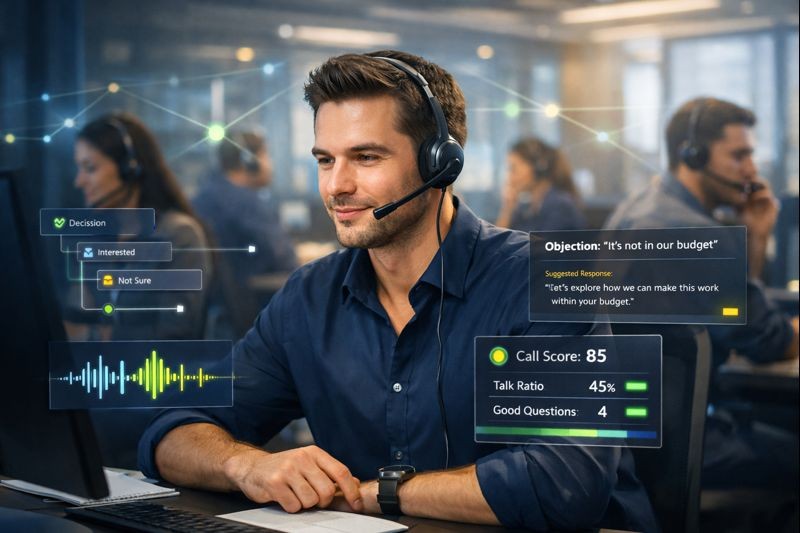
One of Suade’s strongest advantages is live support while the SDR is on an actual prospect call. During the conversation, the AI coaching engine listens in and offers gentle prompts on screen—suggesting sharper questions, cleaner phrasing, or a clearer next step.
When an objection hits, the AI reads the context and recommends a response that fits the moment, not a rigid script. For new reps, this feels like having a calm senior partner beside them during the toughest parts of the call.
“The best coaching happens as close as possible to the moment of action.”
— Common principle in performance coaching
Instant, Data-Driven Feedback And AI Scorecards
After each call—practice or real—Suade creates an AI scorecard. Instead of vague comments, reps see concrete metrics, such as:
Talk‑to‑listen ratio
Strength of the opener
Number and quality of discovery questions
How objections were handled
Because the same rules apply across the team, leaders can compare patterns between top performers and newer reps. Reps get specific notes with examples from their own calls, so they know exactly what to change next.
Comprehensive Post-Call Analysis And Performance Tracking
Beyond single calls, Suade tracks trends over time. Dashboards show how each SDR is progressing, where they struggle, and which objections cause the most trouble. This turns a roleplaying AI SDR platform into a powerful coaching radar.
Managers can see, for example, that one rep struggles when pricing comes up while another drops the ball on next steps. They can then run focused sessions instead of guessing. Reps also see their own progress, which builds motivation and ownership.
High-Impact Use Cases Where AI Roleplaying Delivers Maximum Value
A roleplaying AI SDR system supports nearly every stage of the SDR role—from onboarding to advanced objection handling.
Accelerating New Hire Onboarding And Reducing Ramp Time

New SDRs often wait weeks before they feel ready to own a full cold call block. With Suade, they can run dozens of simulated calls in their first days on the job, testing intros, value props, and objection responses before they touch real prospects.
Because each attempt is scored, new hires fix mistakes fast instead of repeating them for months. Many teams see ramp time fall by around 60% when AI roleplaying is part of onboarding, which helps new reps hit quota faster and stabilizes team performance.
Mastering Cold Calling And Prospecting Confidence
Cold calling triggers nerves even for experienced sellers. A roleplaying AI SDR tool gives reps a place to practice without risk. They can rehearse openings, handle quick brush‑offs, and learn how to hold the line while staying polite.
As scores and call quality improve inside Suade, confidence rises. That confidence usually turns into more dials, better conversations, and roughly 20% more booked meetings when paired with live coaching on real calls.
Perfecting Discovery And Qualification Conversations
Great SDRs do more than pitch—they ask sharp questions that surface real problems and buying intent. AI simulations let teams design rich discovery calls with different buyer types and levels of awareness.
Within this environment, reps practice active listening, summarizing, and confirming next steps. The result is fewer weak handoffs and more truly qualified opportunities that deserve an AE’s time.
Building Bulletproof Objection Handling Skills
Objection handling is often the turning point of a call. Lines like “Send me an email,” “No budget,” or “We already have a vendor” can shut down unprepared reps quickly.
Suade lets SDRs face these moments again and again until their responses feel natural. The roleplaying AI SDR engine provides suggested language in real time and reviews the call afterward to show what worked. Over enough repetitions, calm and confident replies become automatic, keeping more conversations alive.
The Measurable Business Impact ROI Of AI-Powered Roleplaying
For sales leaders, a roleplaying AI SDR platform has to show clear results in ramp time, conversion rates, and revenue—not just feel helpful.
Reduced Ramp Time And Faster Time-To-Quota
When new hires can practice hundreds of conversations quickly, they skip much of the slow trial‑and‑error phase on live prospects. With Suade, teams often see about a 60% cut in ramp time, so SDRs reach quota far sooner and hiring investments pay back faster.
Improved Win Rates And Increased Booked Meetings
Better practice and sharper coaching first show up in booked meetings. As SDRs use AI roleplaying for cold calls and objections, teams see about a 20% lift in meetings set. Top teams that combine this with strong closing skills often see win rates rise by up to 25 percentage points compared with peers.
Enhanced Message Consistency And Methodology Adoption
Rolling out a new product, pitch, or sales method is hard when each rep interprets it differently. AI roleplays give every SDR the same practice space for new talk tracks until they can deliver them smoothly. With Suade, leaders can even require reps to hit a target score on key scenarios before going live, adding a light certification layer to training.
How Suade Improves SDR Performance Through AI
Many tools promise AI for sales; Suade is built specifically around the SDR workflow, connecting preparation, live calls, and follow‑up into one continuous loop.
Pre-Call Dynamic Script Building And Preparation
Before a call, Suade builds dynamic scripts based on the prospect’s role, company, and CRM data. These guides act as smart outlines—offering a strong opening, key questions, and sample objection responses—without forcing reps to read word‑for‑word.
For SDRs, this feels like walking into a call with a partner who already studied the account. Stress drops, and conversations stay closer to the intended message and structure.
During-Call Real-Time AI Coaching And Objection Handling
Once the call starts, Suade listens and offers timely prompts. It might nudge the rep to pause and ask a question, suggest a shorter answer, or flag when the SDR is talking too much. When objections appear, the system proposes context‑aware responses based on what the prospect just said.
This real‑time AI coaching makes Suade stand out among roleplaying AI SDR tools. Reps can test new techniques with less fear because guidance is right on screen at the moment they need it.
Post-Call Comprehensive Analysis And Continuous Improvement
After every call, Suade scores performance against your chosen method, highlights key moments, and points out skill gaps. SDRs can replay sections where they lost control or nailed an objection, then adjust their approach on the very next call.
Managers see the same information in clear dashboards, which makes coaching sessions shorter, more focused, and based on real examples instead of guesswork.
Best Practices For Implementing AI Roleplaying Successfully
Buying a roleplaying AI SDR platform is step one; the real gains come from how it is rolled out, supported, and woven into daily work.
Customize Scenarios To Your Specific Selling Environment
Generic practice feels like homework. The fastest results come when AI roleplays mirror actual buyers, vocabulary, and objections. Load content from your website, decks, and top call recordings into Suade, then design personas that match your ICP, goals, and common blockers.
Blend AI Coaching With Strategic Human Management
AI is ideal for high‑volume drills and instant feedback. Managers are best at deal strategy, mindset, and career development. Let the roleplaying AI SDR engine handle everyday reps, and have managers use the resulting data and call clips to drive targeted one‑on‑ones and team sessions.
Drive Adoption Through Leadership And Workflow Integration
Tools only work when people use them. Fold AI practice into normal routines—for example:
Short Suade warm‑ups before call blocks
Quick simulations before high‑stakes meetings
Weekly practice challenges or friendly contests
When leaders talk about AI scores in team meetings, celebrate progress, and share how they use the data, practice becomes a habit rather than a chore.
Conclusion
For years, SDR teams have lived with a gap between training and live execution. We teach new hires what to say, run a few roleplays, then send them into high‑pressure calls with limited ongoing coaching. Manager time is scarce, and feedback can be inconsistent.
A roleplaying AI SDR platform changes that pattern. With Suade, every rep gets on‑demand practice with realistic buyers, objective feedback after every call, and real‑time guidance during live conversations. Teams using Suade often see ramp time drop by about 60%, booked meetings rise by roughly 20%, and message delivery become far more consistent.
As AI coaching becomes standard, a clear divide is forming between teams that adopt it and those that do not. The first group builds confident SDRs who sound polished in weeks instead of months and who learn from every call. If your goal is a stronger, more reliable SDR team, the real question is how quickly you can put AI roleplaying to work.
FAQs
What Exactly Is AI Roleplaying For SDRs?
AI roleplaying for SDRs is a training setup where reps practice conversations with AI‑driven buyer personas instead of only with managers. The AI behaves like a realistic prospect, asking questions, pushing back, and reacting to tone and wording. After each simulated call, the system scores performance and provides clear feedback that builds skill and confidence without risking real deals.
How Is AI Coaching Different From Traditional Roleplaying?
Traditional roleplaying depends on a manager’s schedule and style, so practice is limited and feedback can vary. AI coaching inside a roleplaying AI SDR platform is always available, which means reps can run as many drills as they like. Feedback is based on data from the entire call and a consistent scoring model, while managers use the insights to focus on higher‑value coaching.
How Long Does It Take To See Results From AI Roleplaying?
Teams often notice softer wins—such as higher confidence and better call structure—within a few weeks of regular use. Measurable gains in booked meetings and ramp time typically appear within one or two months, especially when leaders promote steady practice. With Suade, it is common to see ramp time drop by around 60% and meetings rise by about 20%.
Will AI Replace Sales Managers And Human Coaches?
No. AI is there to support managers, not remove them. A roleplaying AI SDR system is excellent at running many drills, scoring calls, and pointing out patterns, but it cannot replace human judgment about strategy, motivation, or career growth. Managers become more effective because they spend less time on basic roleplays and more time on high‑impact coaching backed by rich data.
What Types Of Sales Scenarios Can AI Roleplaying Simulate?
A strong roleplaying AI SDR platform can simulate nearly every conversation an SDR encounters: cold calls, discovery calls, qualification, quick objection handling, and follow‑ups that push for clear next steps. Many teams also practice renewal or expansion conversations with AI personas modeled on their own customers and markets.
How Do We Measure ROI From AI Sales Coaching Platforms?
The best way to measure ROI is to track a few clear metrics before and after rollout, such as:
Ramp time for new hires
Call‑to‑meeting conversion rates
Meeting‑to‑opportunity conversion
Win rates and average deal size
It also helps to track manager hours spent on manual coaching and the speed of new message adoption. With Suade, many teams see a 60% reduction in ramp time and around a 20% lift in meetings, which builds a strong business case for AI coaching.