
What Is This In Regards To? Gatekeeper Responses That Work
Oct 24, 2025
Learn how to confidently answer “What is this in regards to?” with proven gatekeeper frameworks, real examples, and AI-powered sales coaching tips.
Introduction
The phone rings, the opener lands, and everything feels on track. Then the gatekeeper drops the line every rep knows too well:
“What is this in regards to?”
In that split second, confidence often disappears. Many reps either freeze, ramble, or fall back on a vague answer that sounds exactly like every other cold call. The question “what is this in regards to” seems simple, but it is a fast test of value, context, and confidence. Pass the test and the call continues. Fail it and the conversation ends.
When we treat “what is this in regards to” as a filter instead of a casual question, the call changes. It stops being about sneaking past a gatekeeper and becomes about showing clear value in ten to fifteen seconds. That short response ties directly to connection rates, meeting rates, and how fast new reps ramp.
In this article, we walk through what gatekeepers are really asking, the mistakes that shut calls down, and a simple three-step framework any rep can use. We also share real dialogue examples and how an AI platform like Suade gives reps dynamic scripts, real-time coaching, and post-call insight so that this question stops being scary and starts feeling like the first real pitch. By the end, answering “what is this in regards to” will feel like a skill, not a gamble.
“Treat gatekeepers like partners, not obstacles.”
— Common advice in enterprise sales training
Key Takeaways
The question “what is this in regards to” is a fast filter, not an insult or brush-off. When we see it as a test of relevance, we respond with calm instead of panic. That mindset shift alone keeps more calls alive.
Vague answers, long product speeches, and self-focused openers signal a low-value sales pitch. Gatekeepers hear these patterns every day. Clear, specific language that ties to the executive’s world stands out in seconds.
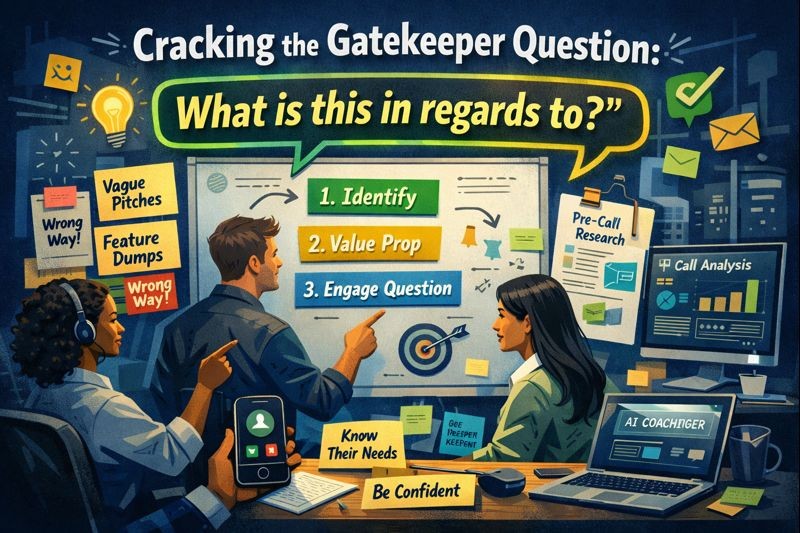
A simple framework works across industries: Identity → Value Proposition → Engagement Question. With practice, this flow sounds natural instead of forced, and gatekeepers have a concrete reason to connect us.
In written communication, in regard to is the grammatically preferred phrase, while in regards to is seen as nonstandard. Clean language supports a strong, professional impression even in short calls.
Suade gives reps dynamic pre-call scripts, real-time AI coaching, and post-call analysis so they can handle “what is this in regards to” with confidence, avoid oversharing, and keep improving with data instead of guesswork.
Understanding The Gatekeeper's Question: What They're Really Asking

When a gatekeeper asks “what is this in regards to”, they are not just asking for the topic of the call. They are doing their job: protecting their leader’s time and moving only the most relevant conversations forward. That one question helps them sort calls into pass through or end now.
Behind “what is this in regards to” are several quick checks. They want to know:
Does this matter to their leader?
Does the caller sound prepared?
Is this a real business conversation or just another spray-and-pray pitch?
They also listen closely to tone, which means how we answer often matters as much as what we say.
Sometimes the question is polite and curious. Other times it sounds rushed, flat, or annoyed. The words are the same, but the intent can range from a strict screen to a genuine request for context. When we listen for tone and stay calm, we can match our answer to the moment instead of reacting from fear.
For us as reps, this question is the first real pitch window. We often get ten seconds or less to show we understand their world and can help their leader with a real problem or goal. Top performers expect “what is this in regards to”, have clear responses ready, and treat the gatekeeper as a partner rather than a wall.
The Psychology Behind Gatekeeper Screening
Gatekeepers sit at the front line and hear a long stream of cold calls every day. Many of those calls have nothing to do with their leader’s priorities, which means they spend a lot of time saying no. Over time, they build sharp instincts for spotting low-value conversations early.
Their main goal is to protect the calendar of the executive they support. If they let every random pitch through, the leader could spend all day in unhelpful meetings instead of driving the business. That pressure makes them careful, and it explains why “what is this in regards to” often sounds firm.
When we understand this pressure, we stop trying to trick or dodge the gatekeeper. Instead, we show respect for their role and give them a clear reason to care about our call. When we do this well, many gatekeepers start to see us as helpful and may even support future calls because we make them look good, too.
Common Mistakes That Kill Your Chances With Gatekeepers

Most reps do not lose the call because the gatekeeper is rude. They lose it because their answer to “what is this in regards to” sounds like every other forgettable pitch.
Three patterns show up again and again:
Vague, low-information answers
Self-centered openers that focus on the rep or company
Feature dumps with long lists of capabilities and buzzwords
On top of these, hesitation, filler words, and oversharing hurt trust. When a rep stumbles through the answer, adds too much detail, or sounds nervous, the gatekeeper checks out fast. Preparation and simple language are our best tools to avoid these traps.
The Vague Response: Why Generic Answers Fail
When a gatekeeper asks “what is this in regards to” and hears “it is about our software platform”, nothing stands out. The answer is generic and could describe hundreds of different products. The gatekeeper gains no insight into why their leader should care.
This kind of reply also signals that we did not research their company or role. If we cannot name a problem, goal, or change in their business, it sounds like we are dialing down a list without a plan. That makes it easy for them to end the call politely.
Specificity fixes this. When we mention an industry, role, or clear outcome, the gatekeeper suddenly has a reason to pause. A focused answer helps them feel that connecting the call might actually help their boss instead of wasting time.
The Self-Centered Pitch: Focusing On Your Agenda
Another common pattern is an answer like “I am calling to introduce myself and my company, Suade.” On the surface it sounds polite. Under the surface, it centers the rep rather than the prospect. The gatekeeper hears that the call is about us, not them.
Gatekeepers and their leaders care about their own targets, problems, and changes in the business. They do not wake up hoping to learn about more vendors for fun. When our opener sounds like a company pitch, it feels like yet another sales task they need to manage.
We get better results when we flip the focus. Instead of saying we want to talk about our platform, we talk about a result their team wants, such as more qualified meetings, faster reporting, or smoother ramp for new reps. That shift turns a self-serving pitch into a helpful offer.
“You can have everything in life you want, if you will just help enough other people get what they want.”
— Zig Ziglar
The Feature Dump: Listing Capabilities Without Context
When pressure hits, many reps deal with “what is this in regards to” by throwing features at the gatekeeper. They talk about real-time analytics, dashboards, AI, and more. Without a link to a clear outcome, none of that sticks.
From the gatekeeper’s view, a fast list of features sounds like a dense script. They may not know what those terms mean, and they probably do not have time to figure it out. The safe move is to cut the call short and protect their leader’s calendar.
Features matter only when tied directly to something the leader cares about. If a feature cuts ramp time for new reps in half, the value is the faster ramp, not the technology under the hood. When we answer with results and problems solved, the gatekeeper can make a quick, informed choice.
The Proven Framework For Responding To "What Is This In Regards To?"

Instead of guessing every time someone asks “what is this in regards to”, we can rely on a simple framework:
Identity
Value Proposition
Engagement Question
This keeps the answer clear, short, and focused on the prospect.
First, we calmly state who we are. This builds a basic level of trust and stops the gatekeeper from feeling like they are speaking to a stranger with hidden intent.
Second, we share a short value statement that links our work to a result their leader might want. This is where we talk about problems solved or outcomes reached for similar roles or companies.
Third, we end with a simple question that invites a response. The goal is to move from a one-way speech into a short conversation, even if it is still with the gatekeeper.
We can prepare several versions of this answer for each segment or persona we call. With Suade, we go further by having the platform build these lines for us based on the company, role, and recent events. That way, when “what is this in regards to” comes up, we already have a sharp answer on screen.
Step 1 – State Your Identity Clearly And Professionally
The first step is simple. We greet the gatekeeper and say our name and company in a calm, clear way. For example:
“Hi Maria, this is Chris from Suade.”
Using their name, when we know it, adds a small touch of respect and helps the call feel more human.
We avoid racing through this line or mumbling. A steady tone and clear words send a quiet signal that we are used to speaking with leaders. We also resist the urge to explain what Suade does at this stage. That detail belongs in the value statement, not the intro.
Step 2 – Deliver A Concise, Benefit-Driven Value Proposition
After we state who we are, we explain why we are calling in a way that centers their world. A strong pattern is:
“The reason for my call is we help [role] in [industry] achieve [result].”
For example:
“The reason for my call is we help heads of sales at B2B teams increase meetings booked by about twenty percent through better call coaching.”
This line tells them who we help, what kind of company we work with, and what changes as a result. It sounds far more specific than “we sell sales software.”
We can also tie in a clear trigger:
“I noticed your team has been hiring a lot of SDRs.”
“I saw you just moved into a new market.”
At Suade, our platform pulls this kind of data before the call, so reps can plug in real details instead of guessing. That turns “what is this in regards to” into a chance to show we did our homework.
Step 3 – Transition With An Engaging Question
Once we state the value, we end with a question that keeps the door open. For example:
“I was calling to learn how you are currently coaching new SDRs on their calls.”
“How is your team handling gatekeeper questions like this right now?”
These questions are easy to answer and clearly linked to the value we just shared.
A good question changes the tone of the call. Instead of feeling like a pitch, it starts to feel like a short, focused chat about a real problem. The gatekeeper can decide whether to share context, pass us through, or schedule a better time.
Even when the gatekeeper does not connect us, their answers help us qualify. We might learn who owns the project, what tools they use, or whether this is even a fit. With practice, this three-step flow becomes natural, and our answer to “what is this in regards to” sounds both confident and respectful.
Real-World Examples: Weak vs. Strong Gatekeeper Responses
Seeing the framework in action makes it easier to apply on live calls. Below are short dialogues that show weak and strong ways to handle “what is this in regards to”. In each one, Suade is the calling company and the target is a clear persona.
The weak versions fall into the traps we covered earlier: vague, self-focused, or full of features with no link to a real pain. Gatekeepers hear lines like this every day, which is why those calls die fast.
The strong versions use Identity, Value, and Engagement. They tie Suade to a measurable result and a familiar challenge in the prospect’s world. This helps the gatekeeper feel they are passing along something that could actually help their leader hit key goals.
We can use these examples as starting points and adjust the details to match our own segments. With Suade, we can even have these lines appear live based on the persona we are calling, which means new reps get strong patterns without years of trial and error.
Example 1 – Banking/Financial Services Prospect
Weak response
“Hi, this is Alex from Suade. This is in regards to our AI coaching platform for your callers.”
Strong response
“Hi Sarah, this is Alex from Suade. The reason for my call is we have been helping heads of commercial banking teams increase meetings booked by around thirty percent by coaching bankers on their outreach calls. I was calling to learn how your team is currently supporting your relationship managers on those outbound conversations.”
The strong version works better because it names the role, the industry, and a clear result. It also connects to a real activity in their space—outreach from bankers to clients—which shows we understand their world. The question at the end invites Sarah to share context instead of just blocking the call.
Example 2 – Technology/SaaS Prospect
Weak response
“Hi, I am calling to introduce Suade and talk about how we can help your sales team.”
Strong response
“Hi Mark, this is Jordan from Suade. We have been working with VPs of Sales at fast-growing SaaS companies to raise SDR meeting rates by about twenty percent using AI-based call coaching. I noticed your company just raised a Series B, and I wanted to quickly understand how you are ramping your new reps on cold calls.”
Here, the strong answer speaks directly to a VP of Sales at a scaling SaaS firm. It points to a clear metric and links Suade to that gain. The funding round makes the call feel timely instead of random, and the closing question moves the conversation forward.
The Grammar Side Note: "In Regard To" vs. "In Regards To"
Since we are talking about the phrase “what is this in regards to”, it helps to know how standard grammar treats it. In formal writing, in regard to is the preferred form. The version with the extra s, in regards to, is seen by style guides as nonstandard.
The reason is that regard in this phrase acts like an uncountable noun, similar to attention. We would not say “in attentions to your email,” and the same idea applies here. That is why guides such as The Chicago Manual of Style and the Oxford English Dictionary list in regard to as the better form.
Many people still say “what is this in regards to” because they mix it with phrases like as regards or sign-offs such as “best regards.” In day-to-day speech, no one will hang up on a rep over this small point. Still, careful language helps build a steady, professional image.
On live sales calls, we often get better results by skipping the whole phrase and going straight to simple words. For example:
“I am calling about how you ramp new SDRs.”
“This is regarding your sales coaching process.”
At Suade, our dynamic scripts use short, clear wording like this so reps sound sharp without worrying about grammar rules in the middle of a call.
How AI-Powered Tools Like Suade Help Reps Master Gatekeeper Interactions

Even with a solid framework, many reps struggle when “what is this in regards to” hits them live. Nerves kick in, the mind goes blank, and practice from training sessions can disappear. This is where an AI-powered platform built for calls makes a real difference.
Suade helps before, during, and after the call:
Before the dial – A dynamic script builder pulls in data about the company, the role, and recent news. It then suggests clear Identity, Value, and Question lines tuned to that prospect, so reps never start from a blank page.
During the call – Suade listens in real time and spots common gatekeeper lines, including “what is this in regards to”. When that happens, the system can suggest phrasing from a library of proven responses. New reps get steady guidance; experienced reps get helpful prompts that keep them sharp.
After the call – Suade breaks down how the rep handled key moments. Leaders can see patterns, such as how often “what is this in regards to” comes up and which answers lead to pass-throughs. Teams have seen around twenty percent more meetings booked and about sixty percent faster ramp time for new reps, because best practices spread from top performers to everyone.
Dynamic Script Building For Personalized Responses
Suade’s dynamic script builder uses firmographic data and recent signals to shape the rep’s talk track. It looks at:
Industry and role
Hiring trends and team size
Funding news, new markets, or major shifts
Then it maps these items to known pains and outcomes. The result is a short set of lines that already feel tuned to that prospect.
These scripts follow the Identity → Value → Question pattern, but the details shift for each call. A rep might see one version for a bank’s commercial leaders and a very different one for a SaaS VP of Sales. Reps can adjust wording to match their own voice, which makes the answer feel natural, not robotic.
By starting the day with strong, relevant lines already written, reps avoid the generic noise that gatekeepers ignore. When “what is this in regards to” comes up, they can speak confidently because they have already thought about what matters to that prospect.
Real-Time AI Coaching During Live Calls
During live calls, Suade acts like a quiet coach on the side. When the gatekeeper asks “what is this in regards to”, the platform recognizes the phrase and surfaces ready-made responses that fit the persona, industry, and call context. The rep sees these on screen and can pick or adapt the one that fits best.
This support is especially helpful for newer reps who are still building call skills. Instead of freezing or slipping into vague talk, they get a clear prompt at the exact moment they need it. Over time, they internalize these patterns and rely less on prompts.
Suade also guides tone and length. Prompts are short, benefit-focused, and free from oversharing. The system nudges reps away from long feature lists and toward sharp value statements and questions. The same real-time help applies to other common gatekeeper lines, so reps can handle a wide range of screens with calm and clarity.
Best Practices For Ongoing Improvement In Gatekeeper Interactions
Mastering answers to “what is this in regards to” is not a one-time task. It is a skill that grows through practice, feedback, and small adjustments over time. Reps and leaders who treat it as a repeatable process see steady gains in connection and meeting rates.
Helpful practices include:
Role-play frequently – Run short drills where one person plays the gatekeeper and the other answers with different versions of Identity, Value, and Question.
Review call recordings – Listening back helps reps hear where they sound vague, rushed, or uncertain.
Test small changes – Leaders can try different value lines and questions, changing only one piece at a time, to see which phrasing gets more pass-throughs.
Suade speeds this up by tracking performance data and showing which talk tracks work best across the team. When we stay current on industry trends and typical pains, our answers to “what is this in regards to” feel timely instead of canned. Over time, this steady practice builds real confidence, and that confidence comes across in every call.
Conclusion
The moment a gatekeeper asks “what is this in regards to” is not a small detail in a cold call. It is the first real test of our message, our focus, and our calm under pressure. When we handle it well, we earn the right to keep talking. When we handle it poorly, the call ends before it ever reaches a decision maker.
A simple pattern helps us stay ready:
Clearly state who we are.
Share a short value statement tied directly to the prospect’s world.
End with a question that invites a reply.
This flow keeps us from slipping into vague talk, self-focused intros, or feature dumps that push gatekeepers away.
Clean language and attention to detail matter too. Even small points, such as knowing that in regard to is the standard form, support a professional image. Combined with practice and feedback, these details raise our level as sales professionals.
With Suade, teams do not have to figure all of this out on their own. The platform brings together dynamic scripts, real-time AI coaching, and deep post-call insight so reps of every experience level can handle “what is this in regards to” with clear, confident answers. The result is more meetings, faster ramp for new hires, and a team that treats gatekeeper interactions as chances to win, not walls to fear.
FAQs
Question 1 – What Should I Say If The Gatekeeper Asks "What Is This Regarding" And I Do Not Have Much Information About The Prospect?
Lack of detail makes it harder to personalize, but it does not mean we have nothing to say. We can anchor our answer on a common pain or goal in their industry, such as:
“We have been helping B2B sales teams increase meeting rates from outbound calls.”
Then we move into a simple question to learn more, such as:
“Is improving outbound performance a priority for your team right now?”
Tools like Suade help by pulling basic firm data and common pains so that even light research turns into a clear, relevant answer.
Question 2 – How Do I Avoid Sounding Scripted When Using A Prepared Response?
Prepared lines are helpful, but the delivery should still feel like a real chat. We can treat scripts as loose points instead of strict word-for-word lines, which lets us adjust phrasing as we talk. Practicing out loud helps smooth the pace and tone so the words feel like our own.
Suade supports this by giving reps short prompts instead of long blocks of text, which encourages natural speech while still keeping the core message on track.
Question 3 – Is It Ever Okay To Ask The Gatekeeper To "Pass Me Through To The Decision Maker"?
Going straight to “please pass me through” without context rarely works and can annoy the gatekeeper. They are judged on how well they protect their leader’s time, so skipping their process feels disrespectful.
A better path is to earn their help by sharing a clear, benefit-focused reason for the call. When they see that you may help their leader hit real goals, they are far more willing to connect you.
Question 4 – What If The Gatekeeper Says "Send An Email" Instead Of Connecting Me?
“Send an email” is a common way to shorten the call, but it can also be a real request. A good move is to agree while adding one small question, such as:
“Happy to do that. So I send something useful, may I ask what your team is focused on with outbound right now?”
If they answer, we gain context that shapes a stronger email and a better follow-up call. If they still prefer email only, we respect that, confirm the best address, and set a reminder to follow up later with a precise subject line and value-focused message.