
Real-World Examples of Gatekeepers in Cold Calls
Nov 1, 2025
Learn how to handle gatekeepers in cold calls with real conversation examples, objection responses, and proven frameworks that help you reach decision-makers.
Introduction
The phone rings, someone picks up, and before we even take a breath we hear:
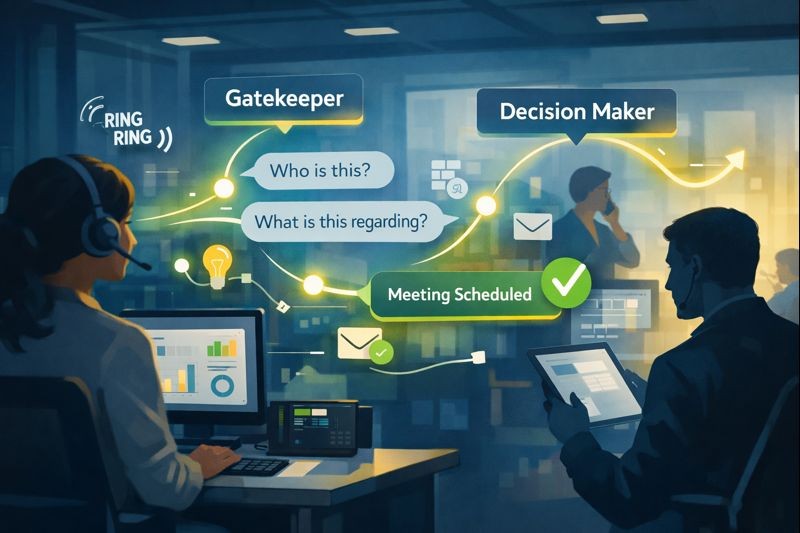
“Who is this?” followed by “What is this regarding?” That tiny drop in the stomach starts.
Most of us have been there. We plan for the decision-maker but meet the gatekeeper instead. Without strong gatekeeper conversations ready, calls die fast. That is why practical examples of gatekeepers in cold calls matter; they show what works on real calls, not just in training slides.
Gatekeepers are not the enemy. They are professionals paid to protect time, filter noise, and keep the right people focused. When we treat them like obstacles, they shut doors; when we treat them like partners, they often open them. A large share of cold calls never reach the decision-maker, not because the offer is bad, but because the gatekeeper interaction falls apart.
The good news is this is a learnable skill. Handling these examples of gatekeepers is not about being born with “the gift of gab,” but about understanding their role, reading the moment, and using clear language. Modern teams go further by using AI, data, and tools like Suade to learn from every conversation and turn patterns into playbooks.
Below, we walk through real conversation snippets, detailed examples of gatekeepers, objection responses, and advanced tactics. By the end, you will have a clear set of moves to plug into your next calling block, plus a view of how AI coaching can help you reach more decision-makers and ramp new reps faster.
"Approach each customer with the idea of helping them solve a problem or achieve a goal, not of selling a product or service." — Brian Tracy
Key Takeaways
Gatekeepers control access to a huge share of B2B decision-makers, so your pipeline depends on how you handle them. When you study real examples of gatekeepers and practice those conversations, pass-through rates climb and the same dials produce more meetings.
The best gatekeeper interactions mix respect, clarity, and value. When you sound confident, speak to outcomes, and share specific insight, you stand out from generic sales calls. The examples of gatekeepers below show how small language shifts change how receptionists and executive assistants respond.
Most gatekeeper objections follow repeatable patterns, which means you can prepare frameworks instead of winging it. Combined with data from many calls, AI coaching, and post-call review from tools like Suade, teams often see roughly a 20 percent lift in booked meetings.
The first fifteen seconds matter more than any clever one-liner. If you open sounding unsure, even the best examples of gatekeepers will not save you. A strong presence and a clear reason for calling make the gatekeeper’s choice easier.
Understanding The Gatekeeper: Your First Point Of Contact

Before applying any examples of gatekeepers, get clear on who they are. Gatekeepers are the people or systems between you and the person who signs off on deals: receptionists, office managers, executive assistants, department coordinators, or automated phone menus.
Their main responsibility is simple: protect executive time from low‑value interruptions, a role that has been extensively studied in gatekeeping research as a critical filter in organizational communication. They are skilled at spotting vague pitches, scattered openings, and callers who sound like they do not belong. Many take pride in filtering out noise so their leaders can focus on high‑impact work.
These professionals are usually sharper than reps expect, operating within a contemporary gatekeeping model where individuals assess credibility and value in real-time interactions. They hear dozens of calls a day and quickly recognize patterns in tone and language. The examples of gatekeepers we will walk through later show how fast they decide whether to pass you through, ask more questions, or shut the call down.
Psychologically, the gatekeeper is measured on two things: efficiency and shielding the executive from waste. When you show that you respect that role and sound like someone bringing value instead of asking for a favor, you stop being “just another sales rep” and start feeling like a helpful filter. Different types of gatekeepers need different approaches, and the real conversations in the next sections show what that sounds like.
The Psychology Behind Successful Gatekeeper Conversations
If you listen closely to strong gatekeeper conversations, success is less about fancy wording and more about how the rep makes the other person feel in the first few seconds.
One key factor is authority bias. Gatekeepers respond better to callers who sound confident, calm, and professional. Clear introductions and steady pacing signal that you belong in conversations with leaders; a shaky voice makes the gatekeeper sense risk and default to “no.”
Another factor is reciprocity. When you offer something useful early—an insight, benchmark, or quick tip—the gatekeeper is more inclined to help. Many strong examples of gatekeepers show reps sharing a data point about meeting conversion or industry trends before asking to be connected.
Pattern interruption also matters. Gatekeepers hear the same openers all day. A slight but professional change in script makes them pay attention, such as leading with a brief result you helped someone like their executive achieve or referencing a specific initiative you saw on LinkedIn.
Social proof gives them cover. When you naturally mention that you work with similar companies or roles, the gatekeeper gains a reason to feel safe passing you along. Short, clear sentences, a relaxed voice, and specific reasons for the call all support this.
"You can have everything in life you want, if you will just help other people get what they want." — Zig Ziglar
Finally, remember how fast gatekeepers decide. In most real examples of gatekeepers, they make up their mind within ten to fifteen seconds about whether you sound worth their leader’s time. When you combine genuine respect with clear value and confident delivery, those seconds work in your favor.
Real Examples Of Effective Gatekeeper Conversations

Theory helps, but nothing beats actual examples of gatekeepers and the exact words reps use. Below are four approaches you can adapt to your own style and market.
Example 1: The Direct Professional Approach
This first scenario is a standard receptionist answering the main line. Direct, confident language often works well because receptionists care about routing calls quickly and cleanly.
Gatekeeper: “Good morning, Atlas Corp, how may I direct your call?”
You: “Good morning, this is Alex from Suade. I am calling to speak with Jordan Lee about improving the cold calling performance of their sales team. Could you connect me with them, please?”
This works because you sound like you belong: you use a specific name, a clear topic, and a polite but firm request. Notice you talk about improving performance, not “selling software,” which feels closer to their goals.
If the gatekeeper asks, “Is Jordan expecting your call?” you can reply, “Not yet, no. We work with sales leaders on this topic and I wanted to share a quick insight that might be helpful.” Direct approaches like this tend to work best with receptionists who value speed and clarity over deep screening.
Example 2: The Value-First Approach With Executive Assistants
Executive assistants are different. They know the executive’s priorities and protect the calendar carefully, so examples of gatekeepers with EAs need a more consultative angle.
Gatekeeper: “Mr. Smith’s office, this is Jennifer speaking.”
You: “Hi Jennifer, this is Alex from Suade. We have been working with several VP of Sales in manufacturing who have seen around a 20 percent lift in SDR meeting conversion from cold calls. I wanted to share a few brief insights with Mr. Smith on what is working for teams like his right now. Would he be the right person to discuss improving sales team performance?”
Here you show respect by using her name and speaking to her responsibilities. You mention a clear result, tie it to her executive’s role, and then ask for guidance instead of demanding a meeting. Many strong examples of gatekeepers show EAs shifting from blocker to guide when treated this way. If she asks about clients or company size, answer briefly, then return to whether this fits Mr. Smith’s focus areas.
Example 3: The Referral/Connection Approach
Nothing changes a gatekeeper’s tone faster than hearing an internal name they trust. That is why many strong examples of gatekeepers use a valid internal connection when possible.
Gatekeeper: “Who is calling, please?”
You: “This is Alex from Suade. I recently spoke with Maria in revenue operations about some cold calling challenges their SDRs are seeing, and she suggested I connect with Chris Johnson to share how other teams are improving their results.”
You are not name-dropping for show; you are giving context that helps the gatekeeper feel safe transferring you. The key is honesty—never invent names or meetings. With solid pre‑call research and real touchpoints, transfer rates often jump.
Example 4: Handling The "What's This Regarding?" Question
For many reps, this is the scariest line. It shows up in almost all examples of gatekeepers and can either move you forward or end the call.
Gatekeeper: “And what is this regarding?”
You: “It is regarding sales performance, specifically how Chris’s team can book more qualified meetings from their cold calling efforts. I have a few data points I would like to share with Chris directly. Are they available for a brief conversation now?”
This answer addresses the question without rambling. You focus on an outcome the executive cares about and smoothly return to availability. Avoid phrases like “just calling to introduce myself” or “it is a sales call,” which shut things down fast.
Common Gatekeeper Objections And How To Navigate Them

No matter how good your opening is, you will still hear objections. The good news is they repeat. That means you can study examples of gatekeepers facing the same lines and prepare responses that feel natural instead of forced.
"They're Not Available Right Now"
You will hear this constantly, and often it is true. The mistake is treating it as the end of the call. In strong examples of gatekeepers, reps keep gentle control and set up the next step.
Three simple paths:
“I understand. When is usually a better time to reach them for a quick five‑minute call about their team’s cold calling performance?”
“No problem at all. What is the best way to get time on their calendar—should I coordinate through you, or is there a scheduling link they prefer?”
“Got it, thanks for letting me know. Would it be helpful if I sent over a short summary of what other teams are seeing with cold calling so they have context before we connect?”
Each option respects the gatekeeper while keeping the door open.
"Can You Send An Email?"
This line can be a brush‑off or a real request. Either way, agree while keeping the live conversation active. Many effective examples of gatekeepers follow a similar arc.
You: “I would be happy to. To make sure I send something useful, what is Chris most focused on right now when it comes to new pipeline from cold calls?”
That turns the moment into a short discovery question instead of a hand‑off.
You: “Great, thank you. What is the best email address to use, and when would it make sense for me to follow up if they have not had a chance to review it—early next week or later?”
Now you have insight, permission to email, and a follow‑up window. Strong examples of gatekeepers use this objection to gather intel instead of losing momentum.
"We're Not Interested" Or "We Already Have Something In Place"
This line appears a lot in examples of gatekeepers, sometimes from habit. Pushing hard here usually backfires; a softer pivot works better.
You: “I completely understand. Most sales leaders we work with felt their current approach was fine at first. I am not calling to replace anything right now, only to share a few new data points about cold calling performance that some find helpful regardless of their current tools. Would it be alright if I send that brief overview for Chris to look at when it is convenient?”
If the gatekeeper still pushes back, accept it, thank them, and note the account for later. Respect in these examples of gatekeepers keeps your brand image strong for future outreach.
"Are They Expecting Your Call?"
This question tests both honesty and confidence. The best examples of gatekeepers show reps answering directly without sounding nervous.
You: “Not specifically, no. We have been helping other revenue leaders address cold calling performance issues and thought this might be useful for Chris as well. Many executives appreciate a quick heads up on what is working for similar teams.”
Another option:
You: “We have not connected yet. I have some recent data on meeting conversion from cold calls that I believe could be worth a short conversation.”
In both cases you stay clear, calm, and focused on value instead of tricks—something gatekeepers remember.
Advanced Techniques: When Standard Approaches Don't Work
Sometimes even the best examples of gatekeepers and standard frameworks are not enough. High‑value accounts, tight executive calendars, or very strict assistants may call for more advanced tactics.
Consider:
Change the timing. Call earlier in the morning or later in the afternoon, when decision‑makers are more likely to answer their own line and fewer gatekeepers are on duty.
Use a departmental side door. Call a related team (marketing, revenue operations, sales enablement), ask a smart question, then request a transfer. Many top gatekeeper conversations start this way.
Create a genuine callback. If you have tried the account before, reference that: “We have tried to reach Chris a couple of times about cold calling performance and I wanted to follow up,” paired with short, value‑focused voicemails.
Work multi‑channel. When your name shows up in the executive’s inbox and on LinkedIn, the gatekeeper feels more comfortable putting you through. Teams using Suade often see the best pass‑through rates when they mix phone, email, and social touches.
The Role Of Preparation In Gatekeeper Success
Strong gatekeeper conversations start long before you dial. The best examples of gatekeepers almost always have solid preparation behind them.
Before calling, quickly:
Look up the decision‑maker’s name, role, and one current focus area (from LinkedIn, press releases, or the company site).
Sketch the company’s structure so you know who owns SDRs, operations, and revenue.
Note one short outcome you can speak to (“more meetings from cold calls”) instead of a product pitch.
Suade’s pre‑call dynamic script building helps by turning that research into targeted talking points based on the account and role. Combine this with short role‑plays—especially around “What is this regarding?”—and notes on each gatekeeper’s name and preferences so every call builds on the last.
How AI And Modern Tools Improve Gatekeeper Conversations

AI means you no longer have to rely only on memory and guesswork. When you combine real examples of gatekeepers with live coaching and post‑call data, you shorten the learning curve for every rep.
With Suade, reps get on‑screen guidance during calls. If a gatekeeper asks, “Are they expecting your call?” the system surfaces proven responses from past successful gatekeeper conversations that match that scenario.
Afterward, Suade analyzes each interaction, showing where reps lose momentum and which phrases correlate with successful passes. New hires gain access to hundreds of proven examples of gatekeepers, while leaders see pass‑through rates, common objections, and coaching priorities in one place.
Technology does not replace the human side, but it acts like a smart assistant supporting better gatekeeper conversations call after call.
Building Gatekeeper Relationships For Long-Term Success
Many reps treat gatekeepers as one‑time hurdles instead of breaking through traditional gatekeeper barriers by building genuine, respectful professional relationships over time. The strongest examples of gatekeepers show reps building real relationships over time.
Use their names, ask short respectful questions like, “What is usually the best time for Chris to take quick vendor calls?” and follow through when you promise to send something or call back. Sending a one‑page cold calling benchmark, not a hard pitch, can also turn some gatekeepers into informal allies.
"You don't close a sale; you open a relationship if you want to build a long-term, successful enterprise." — Patricia Fripp
Respect boundaries—if someone says, “Email is the only way,” work within that and avoid sneaky tactics. Over time, gatekeepers may share who else to loop in, when budget talks happen, or which topics matter most, giving you a practical map of the account.
Common Mistakes That Get SDRs Blocked By Gatekeepers
Sometimes the fastest way to improve is by looking at what not to do. Many failed examples of gatekeepers share the same patterns.
Watch out for:
Giving up too fast. “I will just leave a voicemail” at the first pushback tells the gatekeeper you lack conviction.
Being vague or evasive. Dodging “What is this regarding?” makes them default to “no.”
Poor tone or over‑explaining. Sounding annoyed, rushed, or launching into a long pitch closes doors.
Ignoring what you learn. Not recording gatekeeper names, preferences, and past talks means starting from zero every time.
The best gatekeeper conversations adapt to whether you are speaking with a receptionist, an EA, or an internal manager instead of treating everyone the same.
Measuring And Improving Your Gatekeeper Success Rate
What you do not track, you cannot improve. Start with pass‑through rate—the percentage of gatekeeper conversations that reach a decision‑maker—and note which objections appear most often.
Listen back to a few calls each week, alone or as a team, and build a short playbook of lines that work. Suade helps by combining call recordings, post‑call analysis, and performance data so leaders can see who excels with gatekeepers and coach others toward the same level.
Conclusion
Gatekeeper conversations are skills you can learn, practice, and refine. When you study real examples of gatekeepers, work through objection patterns, and stay honest and respectful, calls that once felt intimidating become manageable.
Better gatekeeper navigation means more meetings, more qualified pipeline, and more revenue without adding dials. Modern tools like Suade speed up that learning by turning every call into coaching fuel, so each conversation becomes a chance to show professionalism, build trust, and move closer to the decision‑makers who can say yes.
FAQs
What Should I Say If The Gatekeeper Asks Who I Am?
When a gatekeeper asks who you are, answer clearly and calmly. For example: “This is Alex from Suade. We work with sales teams to improve their cold calling performance.” That kind of opener fits many positive examples of gatekeepers. Avoid long job titles or jargon and never try to hide your name or company; that damages trust fast.
How Many Times Should I Try Calling Before Giving Up On Reaching Past A Gatekeeper?
Most teams find that six to eight touch attempts across different channels is a good range before pausing. In our own examples of gatekeepers, results improve when reps vary call times (early morning, mid‑day, late afternoon) instead of staying in one slot. Mix phone with email and LinkedIn so your name feels familiar, and log any new information the gatekeeper shares.
Is It Okay To Ask The Gatekeeper Questions About The Decision-Maker Or Company?
Yes—asking thoughtful questions is smart. Many successful examples of gatekeepers include lines like, “I want to make sure I am reaching the right person. Who usually handles decisions about SDR performance there?” Frame questions as requests for guidance, not interrogation. Avoid digging for personal details or anything that feels sneaky.
What Is The Best Time Of Day To Call To Avoid Gatekeepers?
There is no perfect time, but patterns do show up in many examples of gatekeepers. Early mornings (the first hour of the day) and later afternoons often have fewer people screening calls, so decision‑makers are more likely to answer their own phones. Lunch periods can also work in some companies. Still, do not focus only on “avoiding” gatekeepers; you want to build relationships with them too.
Should I Leave Voicemails If I Cannot Get Past The Gatekeeper?
Yes, short thoughtful voicemails support your overall contact strategy. Many good examples of gatekeepers include a note that the rep has called before and left a brief message, which makes the caller sound serious but not pushy. Keep voicemails under thirty seconds, focus on one clear value point, and include your name and number at the beginning and the end.
How Do I Handle Automated Phone Systems Instead Of Human Gatekeepers?
Automated menus are a different kind of gatekeeper, but the goal is the same: reach the right person with minimal friction. In many examples of gatekeepers that involve phone trees, the best results come from research to find direct dials or extensions. When that is not possible, listen carefully to the menu and choose options that lead to departments likely to help, such as sales or operations, or press zero to reach a live operator. Once you find a good direct number, save it for future calls.